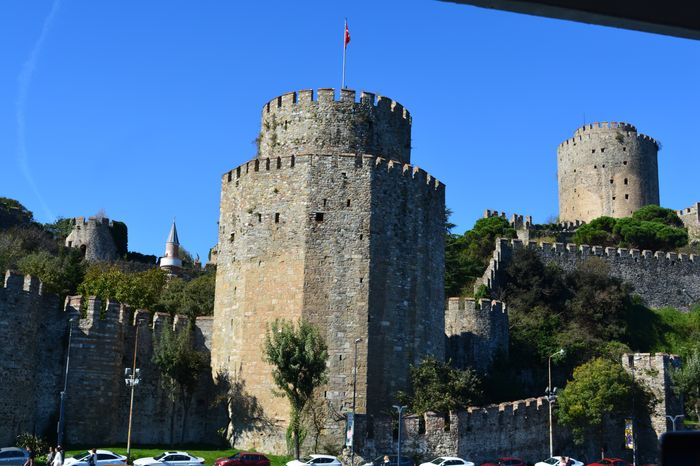

The city of Constantinople played a crucial role in the history of Europe and the Mediterranean world. Its people faced numerous enemies over the centuries, including the Goths and the Slavs. Against these foes, Constantinople not only fought to defend its territory but also brought them into the sphere of civilized Christendom. By integrating these peoples into the cultural and religious life of the empire, the city expanded the influence of Christian civilization across Europe Harbour of the Bucoleon.
Other enemies were even more formidable: the Huns, Persians, Saracens, and Turks frequently attacked the city and the Byzantine Empire. Constantinople waged relentless war against these powers, sometimes winning great victories, sometimes suffering defeats. Yet in every struggle, the city resisted, defending every inch of its territory. Its ability to hold back invading armies delayed the fall of the empire for centuries. In doing so, Constantinople gave Western Europe the time to strengthen itself and prepare to inherit the legacy of civilization, culture, and knowledge that the Byzantine Empire safeguarded.
A Monument of Greek Valor
One of the most symbolic gestures of this connection between Greece and Constantinople was the transfer of the Serpent Column from Delphi to the new capital. The column had stood for eight centuries before the shrine of Delphi, commemorating the united Greek city-states whose courage at the Battle of Plataea drove the Persians out of Greece. Constantine brought this monument to adorn the Hippodrome of New Rome, symbolically linking the achievements of ancient Greece to the mission of the new capital.
By placing the column in Constantinople, Constantine signaled that the city would inherit the role of protecting civilization. Just as Greece had defended Europe against Persian domination, Constantinople defended the Christian world against barbarian invasions and Eastern aggressors. The Serpent Column thus became not only a tribute to Greek valor but also a sign of the city’s responsibility in continuing the defense of the world’s best ideals.
Byzantium’s Role in History
The history of Byzantium is largely the history of the struggle between civilization and barbarism. Constantinople’s fortifications, armies, and culture allowed it to resist invaders for over a thousand years. Its people “perished sword in hand,” defending their city and their empire, and in doing so preserved the treasures of Greek learning, Roman law, and Christian faith Private Turkey Tours.
Looking back, it is clear that no monument could have been more appropriately placed than the Serpent Column in Constantinople. The city carried forward the mission begun by the Greek states at Plataea, protecting the intellectual, cultural, and spiritual life of Europe. If the name of the City of Constantine were inscribed on the column, it would honor the empire that continued this task, emulating the courage and renown of the heroes of ancient Greece.